Tuesday, 17 September 2013

Rocket engine

One of the most amazing endeavors man has ever undertaken is the exploration of space. A big p­art of the amazement is the complexity. Space exploration is complicated because there are so many problems to solve and obstacles to overcome.

Rocket engines as a group have the highest exhaust velocities, are by far the lightest, but are the least propellant efficient of all types of jet engines.

Rocket engines are fundamentally different. Rocket engines are reaction engines. The basic principle driving a rocket engine is the famous Newtonian principle that "to every action there is an equal and opposite reaction." A rocket engine is throwing mass in one direction and benefiting from the reaction that occurs in the other direction as a result.

Principle of operation

 Rocket engines produce thrust by the expulsion of a high-speed fluid exhaust. This fluid is nearly always a gas which is created by high pressure (10-200 bar) combustion of solid or liquid propellants, consisting of fuel and oxidiser components, within a combustion chamber.
Rocket engines produce thrust by the expulsion of a high-speed fluid exhaust. This fluid is nearly always a gas which is created by high pressure (10-200 bar) combustion of solid or liquid propellants, consisting of fuel and oxidiser components, within a combustion chamber.
The fluid exhaust is then passed through a supersonic propelling nozzle which uses heat energy of the gas to accelerate the exhaust to very high speed, and the reaction to this pushes the engine in the opposite direction.
In rocket engines, high temperatures and pressures are highly desirable for good performance as this permits a longer nozzle to be fitted to the engine, which gives higher exhaust speeds, as well as giving better thermodynamic efficiency.

Numerical control programming or NC programming

In modern CNC systems, end-to-end component design is highly automated using computer-aided design (CAD) and computer-aided manufacturing (CAM) programs. The programs produce a computer file that is interpreted to extract the commands needed to operate a particular machine via a postprocessor, and then loaded into the CNC machines for production.

Numerical control (NC) is the automation of machine tools that are operated by abstractly programmed commands encoded on a storage medium, as opposed to controlled manually via handwheels or levers, or mechanically automated via cams alone
 
http://ncprogramming.files.wordpress.com/2009/09/tool-3.jpg
Complex parts can be quickly and accurately programmed, over an extensive range of component types, in Catia V5 and subsequently verified in Vericut.

https://blogger.googleusercontent.com/img/b/R29vZ2xl/AVvXsEiMP6wvEZTQqzIHe5GVR-u5-7LPbrgRyT0xzevA4LxH_cHyITDKnycjmmoEam9gXwakLSkN0wArDQdGT45zNWP38AGauS0GlsNjs9sZ8qRy0AkMxUvpGCx1N7HMNoJsFPf7tuyYOa5pz5it/s400/5.PNG
In modern CNC systems, end-to-end component design is highly automated using computer-aided design (CAD) and computer-aided manufacturing (CAM) programs. The programs produce a computer file that is interpreted to extract the commands needed to operate a particular machine via a postprocessor, and then loaded into the CNC machines for production.

http://www.futuretooldesign.com/images/cnc-main.gif
Within the numerical systems of CNC programming it is possible for the code generator to assume that the controlled mechanism is always perfectly accurate, or that accuracy tolerances are identical for all cutting or movement directions. This is not always a true condition of CNC tools. CNC tools with a large amount of mechanical backlash can still be highly accurate if the drive or cutting mechanism is only driven so as to apply cutting force from one direction, and all driving systems are pressed tight together in that one cutting direction.

Thursday, 8 August 2013

The Bugatti

In 1998, the Volkswagen Group purchased the trademark rights on the former car manufacturer Bugatti in order to revive the brand.

http://superchargr.webs.com/photos/Bugatti-Wallpaer/2006%2520Bugatti%2520Veyron%2520W16%25201280x960_06.jpg
The Bugatti Veyron is, by every measure, the world's most extreme production road car. It's the quickest to 60, has the highest top speed, and can absolutely dominate a track.

The Bugatti Veyron is a car built around an engine. Essentially, Bugatti made the decision to blow the doors off the supercar world by creating a 1,000-horsepower engine. Everything else follows from that resolution.

On 6 April 2013, Bugatti set the record for having the highest top speed of any roadster in the world with the Veyron Grand Sport Vitesse, reaching on average a top speed of 408.84 km/h (254.04 mph)

The Veyron weighs a hulking 4,160 lbs, but even its harshest critics admit its handling is surprisingly sharp. Gordon Murray, designer of the McLaren F1 was very skeptical of the Veyron during its development, but after driving the finished car, he conceded it is a "huge achievement."
http://www.hottunedcars.com/wp-content/uploads/2010/03/Bugatti-16C-Galibier-Saloon-images-23.jpg

The Veyron's brakes use cross drilled, radially vented carbon fibre reinforced silicon carbide (C/SiC) composite discs, manufactured by SGL Carbon, which have a much greater resistance to brake fade when compared with conventional cast iron discs.

Wednesday, 7 August 2013

Biofuel

Biofuels have been around as long as cars have. At the start of the 20th century, Henry Ford planned to fuel his Model Ts with ethanol, and early diesel engines were shown to run on peanut oil.
http://newscenter.lbl.gov/wp-content/uploads/BiofuelLifeCycle1.jpg

A biofuel is a fuel that uses energy from a carbon fixation.
Gasoline and diesel are actually ancient biofuels. But they are known as fossil fuels because they are made from decomposed plants and animals that have been buried in the ground for millions of years. Biofuels are similar, except that they're made from plants grown today.

Biodiesel is made from vegetable oils and animal fats. Biodiesel can be used as a fuel for vehicles in its pure form, but it is usually used as a diesel additive to reduce levels of particulates, carbon monoxide, and hydrocarbons from diesel-powered vehicles. 
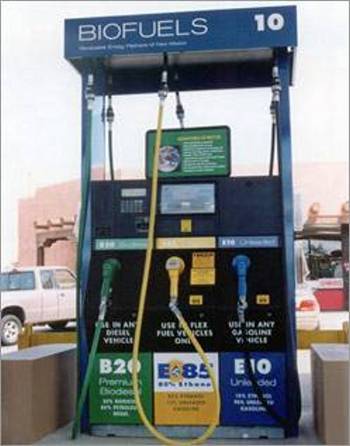
Much of the gasoline in the United States is blended with a biofuel—ethanol. This is the same stuff as in alcoholic drinks, except that it's made from corn that has been heavily processed. There are various ways of making biofuels, but they generally use chemical reactions, fermentation, and heat to break down the starches, sugars, and other molecules in plants. The leftover products are then refined to produce a fuel that cars can use.

http://www.agricorner.com/wp-content/uploads/2011/02/biofuel-ethanol.jpg
In 2010,worldwide biofuel production reached 105 billion liters (28 billion gallons US), up 17% from 2009, and biofuels provided 2.7% of the world's fuels for road transport, a contribution largely made up of ethanol and biodiesel. Global ethanol fuel production reached 86 billion liters (23 billion gallons US) in 2010, with the United States and Brazil as the world's top producers, accounting together for 90% of global production.

Biodiesel is the most common biofuel in Europe. It is produced from oils or fats using transesterification and is a liquid similar in composition to fossil/mineral diesel.

http://riotimesonline.com/wp-content/uploads/2010/02/biofuel_pump.jpg

Biofuel development in India centers mainly around the cultivation and processing of Jatropha plant seeds which are very rich in oil (40%). The drivers for this are historic, functional, economic, environmental, moral and political.

Friday, 26 July 2013

Thrust

In mechanical engineering, force orthogonal to the main load (such as in parallel helical gears) is referred to as thrust.

A motorboat generates thrust (or reverse thrust) when the propellers are turned to accelerate water backwards (or forwards). The resulting thrust pushes the boat in the opposite direction to the sum of the momentum change in the water flowing through the propeller.


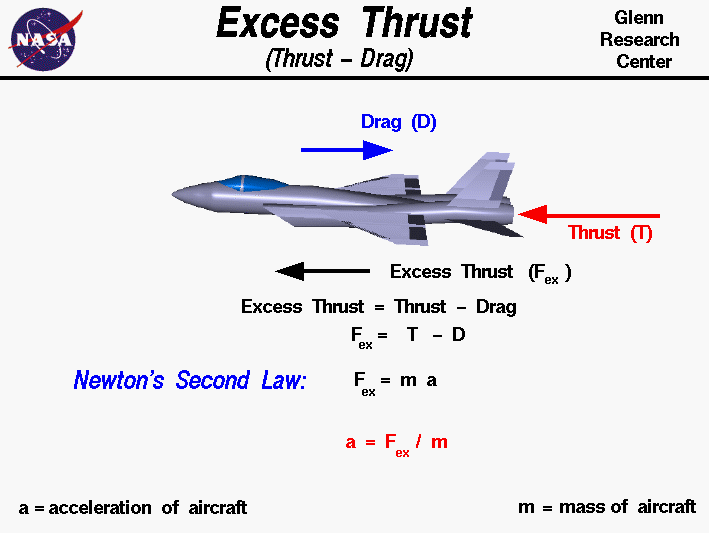
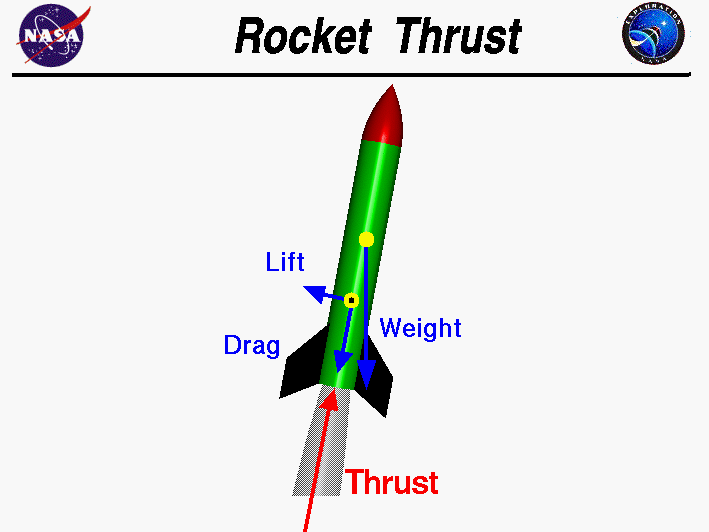
Thrust is the force which moves an aircraft through the air. Thrust is used to overcome the drag of an airplane, and to overcome the weight of a rocket. Thrust is generated by the engines of the aircraft through some kind of propulsion system.

A jet engine has no propeller, so the propulsive power of a jet engine is determined from its thrust as follows. Power is the force (F) it takes to move something over some distance (d) divided by the time (t) it takes to move that distance
\mathbf{P}=\mathbf{F}\frac{d}{t}
In case of a rocket or a jet aircraft, the force is exactly the thrust produced by the engine. If the rocket or aircraft is moving at about a constant speed, then distance divided by time is just speed, so power is thrust times speed
\mathbf{P}=\mathbf{T}{v}


Sunday, 21 July 2013

Spark Plug

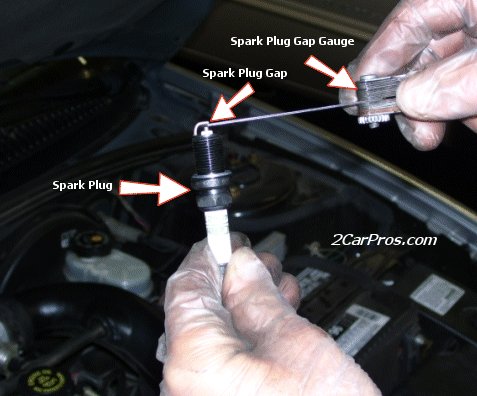
The spark plug is quite simple in theory: It forces electricity to arc across a gap, just like a bolt of lightning. The electricity must be at a very high voltage in order to travel across the gap and create a good spark. Voltage at the spark plug can be anywhere from 40,000 to 100,000 volts.
http://www.2carpros.com/images/articles/engine/maintenance/tune_up/spark_plugs/how_to_gap_a_spark_plug.jpg
Spark plugs may also be used for other purposes; in Saab Direct Ignition when they are not firing, spark plugs are used to measure ionization in the cylinders - this ionic current measurement is used to replace the ordinary cam phase sensor, knock sensor and misfire measurement function. Spark plugs may also be used in other applications such as furnaces wherein a combustible fuel/air mixture must be ignited. In this case, they are sometimes referred to as flame igniters.
http://static.ddmcdn.com/gif/change-spark-plugs-1.jpg

Operation::

http://www.ngk.de/uploads/tx_templavoila/ngk_einbaulage_zuendkerzen_en_01.jpg
The plug is connected to the high voltage generated by an ignition coil or magneto. As the electrons flow from the coil, a voltage difference develops between the central electrode and side electrode. No current can flow because the fuel and air in the gap is an insulator, but as the voltage rises further, it begins to change the structure of the gases between the electrodes. Once the voltage exceeds the dielectric strength of the gases, the gases become ionized. The ionized gas becomes a conductor and allows electrons to flow across the gap. Spark plugs usually require voltage of 12,000–25,000 volts or more to 'fire' properly, although it can go up to 45,000 volts. They supply higher current during the discharge process resulting in a hotter and longer-duration spark.

Wednesday, 22 May 2013

Jet pack


Jet pack, rocket belt, rocket pack and similar names are used for various types of devices, usually worn on the back, that are propelled by jets of escaping gases (or in some cases liquid water) so as to allow a single user to fly.
The concept emerged from science fiction in the 1920s and became popular in the 1960s as the technology became a reality. The most common use of the jet pack has been in extra-vehicular activities for astronauts. Despite decades of advancement in the technology, the challenges of Earth's atmosphere, Earth's gravity, and the fact that the human body is not adapted to fly naturally remain an obstacle to its potential use in the military or as a means of personal transport.


Powerhouse Productions Rocketbelt

More commonly known as "The Rocketman", Powerhouse Productions, owned and operated by Kinnie Gibson, is the first company to manufacture the 30 second flying Rocketbelt (June 1994) and to exclusively organize Rocketbelt performances. Since 1983 Powerhouse Productions has performed over show flights in over 40 countries such as the Carnival in Rio de Janerio, Super Bowls, the Rose Parade, Daytona 500, and the Michael jackson Dangerous World Tour, as well as many television shows including Walker Texas Ranger, The Fall Guy and NCIS. Powerhouse Rocketbelt pilots include stuntman Kinnie Gibson and Dan Schlund.

Turbojet pack

Packs with a turbojet engine are fueled with traditional kerosene. They have higher efficiency, greater height and a duration of flight of many minutes, but they are complex in construction and very expensive. Only one working model of this pack was made; it underwent flight tests in the 1960s and at present it no longer flies.

NASA's Manned Maneuvering Unit (MMU) (compressed gas powered)

In the 1980s, NASA demonstrated the Manned Maneuvering Unit (MMU), a rocket pack that allowed an astronaut to function as his/her own spacecraft, but the system was retired before the decade was over. The MMU is the only jet pack of practical importance. Its operational area is outside a space station or spacecraft, where an astronaut can limitedly move independently. The MMU's propulsion was produced by high-pressure nitrogen gas discharged through nozzles (of which the MMU has 24). The MMU was used after 1984 in three Space Shuttle missions